

Lead and phthalates in toys: the federal limits
The limits CPSC describes, in its own words and numbers.
Disclosure: We may earn a commission if you buy through links on this page. It does not change our guidance. Affiliate Disclosure
Lead content
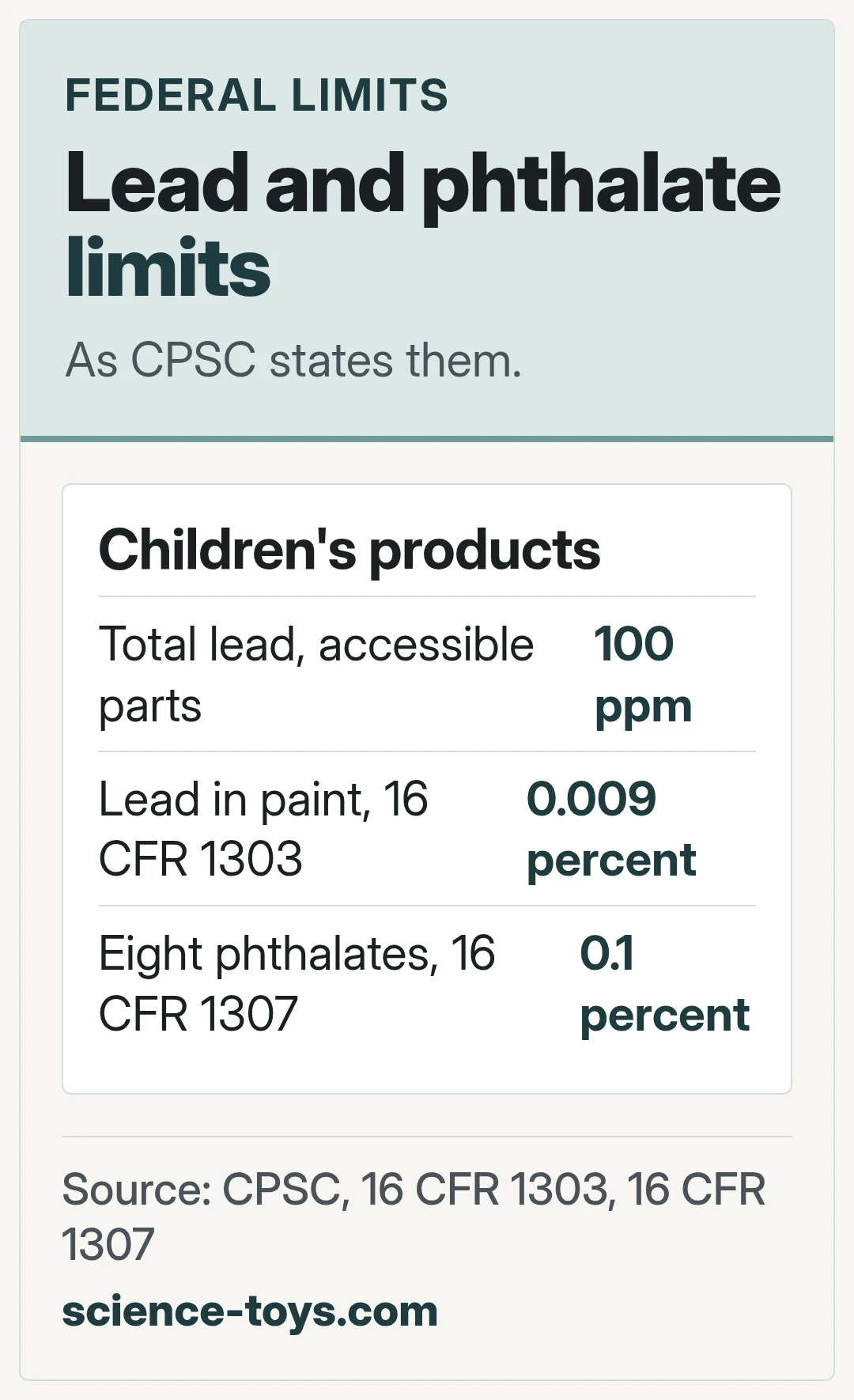
CPSC says children's products may not contain more than 100 parts per million (ppm) of total lead content in any accessible part.
Lead in paint
CPSC says paint and similar surface coatings on toys and other children's articles may not contain more than 0.009 percent (90 ppm) lead. The rule is at 16 CFR part 1303.
Phthalates
CPSC says children's toys and child care articles may not contain more than 0.1 percent (1,000 ppm) of eight listed phthalates in an accessible plasticized component. The rule is at 16 CFR part 1307.
Who certifies
CPSC says manufacturers and importers of children's products certify, in a Children's Product Certificate based on third-party testing, that their products comply with the rules that apply. Ask the maker or seller about the certificate.
What we do not say
We do not describe home lead tests, and we do not say any product is free of lead or phthalates.
This is general information, not legal advice.
Sources: CPSC, Total Lead Content; CPSC, Lead in Paint FAQ; eCFR, 16 CFR Part 1303, Ban of Lead-Containing Paint; CPSC, Phthalates Business Guidance; eCFR, 16 CFR Part 1307, Prohibition of Children's Toys and Child Care Articles Containing Specified Phthalates; CPSC, Children's Product Certificate.
FAQ
General information only, for adults choosing toys for children. We do not test, certify, or rate any product, and we do not say any toy or kit is safe or right for a particular child or age. Before you buy or use one, read the maker's age grade, warnings, and instructions, follow any adult supervision directions, and check for recalls at cpsc.gov/Recalls. Keep small parts, magnets, button and coin batteries, and kit chemicals away from young children. A swallowed magnet, button battery, or coin battery needs medical help right away; do not delay. If you think a child swallowed or touched something harmful, call Poison Help at 1-800-222-1222. In an emergency, call 911.

Next: certificates
Who issues it, how to ask.
